
Though the Napa Valley is world-renowned, many locals know that some of the best varietals of “Napa type” wines are sourced on the “other side of the hill” – meaning, the ridge to the east. On the other side is Pope Valley where the soil and elevation changes are the same, though the heat seems more intense. The result are wineries that produce rich and classic “Napa style” varietals like cabernet sauvignon, syrah and petit syrah without the world-class prices. It’s worth the extra effort, and the spinal cord of this experience stretches from Butts Canyon Road near Middleton in the north to the south on Pope Valley Road and then onto Lower Chiles Valley Road. The payoff is the resplendent Northern California terrain of burnished brown hillsides dappled with heritage oaks. From Danville, a ride up to the Napa Valley and crossing over the Silverado Trail to the junction with Highway 128 east will bring you around Lake Hennessy and onto Pope Valley Road. The two-lane roads in this region rise and buck with the slopy, oak-covered hillsides, so hold onto your coffee cup.
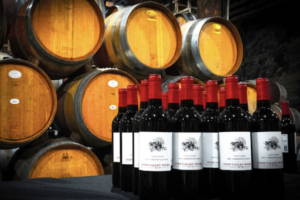
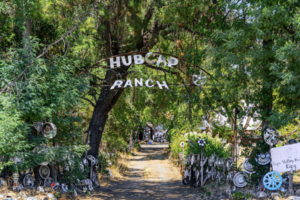
At the Rustridge Winery located at the junction of Pope Valley and Lower Chiles Valley roads, you can find a “dark, intense, and rustic style of Petite Sirah best paired with rich, heavy, or savory foods (like grilled or seared meats).” This is an area rich in zinfandel, Syrah, cabernet and other “big red” varietals. Though the elevations of some vineyards approach 1,000 feet, meaning cooler nights, during the day you feel a more intense heat. When I was there in early August it was 102 in the sun. And yet the lush, full verdant vineyards below the Lower Chiles Valley Road seemed to revel in the strong sun. You could almost feel the tannins surging into grape skins. A couple years later, these wines will growl at the heaviest barbecue sauces on your ribs and laugh at the Bearnaise sauce atop your tomahawk rib-eye. The 2023 Langtry Farms cabernet is listed at $45 a bottle, about half of what would be found to the west for such a deep, luscious red for its (from the website) “concentrated dark fruit flavors, structural depth, and refined, mature tannins.” But should you want to explore, you can find the $145 cab at the Maxville Winery, as well as similarly priced vintages at the eponymous Pope Valley Winery. Also, for a change of pace, drop into the Hub Cap Farm almost across the road. The number of wineries per mile are far, far fewer than in the Napa Valley. Thus, many are not open during Mondays and Tuesdays, and most allow visitors by appointment only, though all have their wines available online. It’s best to plan ahead. On the other hand, traffic in this region is much less compared to Napa Valley on a Saturday or
Sunday. Also, there are stretches of deep remoteness. It’s ironic to know that with California’s population at about 40 million, which means about 1 in 8 people in this country live in this state, there are still regions very near cultural outposts like St. Helena that bring you into vast expanses of open land. And that’s a reminder of the natural threats therein: Butts Canyon Road was closed in 2014 due to a huge wildfire, and scorched tree stalks remain on many hillsides. It’s a day-long getaway that reminds us again that Northern California has many attractions, and even more remote locations like the Pope Valley reveal its charms once you arrive.
By Ted Johnson, Resident since 1991, Photos by by Dan Schultz