
From the Gold Rush towns to the earliest settlements on the coast, it’s quite common for any short trip in Northern California to reveal historical charm. One of the easiest but often most overlooked regions is on Highway 160 north of the Antioch Bridge in one of the state’s most productive agricultural regions known as the Sacramento River Delta. The two-lane road sits atop the levee constructed by Army Corps of Engineers about 100 years ago due to the river’s tendency to flood. A 30-mile drive north of the bridge reveals the area’s assets. First, it’s the soil. The floods left a silt rich in minerals, and the river creates a high-water table that makes it extremely easy to irrigate crops. Early settlers took advantage by planting vast orchards to go along with fields of tomatoes, corn, squash and about anything.
Many orchards have been replaced by grapes of all varietals. The center of this region is Walnut Grove, about 60 miles from Danville. It is a true ag-first town of a little more than 1,000 residents that during summer weekends becomes a haven for water skiers and boating enthusiasts.
About three miles south of Walnut Grove is the Ryde Hotel, a throw-back rest stop built in the 1880s, then rebuilt after a fire and now carrying that 1920s Art Deco style that made it a speakeasy during
Prohibition. It was once a first-rate restaurant that now specializes in Sunday brunch. With its charming garden, large dining room and bar, it remains popular for both weddings and receptions.
It’s worth noting that this region is spliced by various channels of the river, and that’s why a casual ride from the Ryde through the vineyards and orchards and large homes on the banks brings you to something right out of the Great Gatsby – the Grand Island Mansion.
Designed in 1917 as the home of Lewis Meyers, a major fruit farmer, this four-story, 24,000-square-foot, 58-room villa is the largest private estate in Northern California. It is stocked with the finest features of classical architecture and expert craftsmanship. From the
website:
Distinctive original features like marble fireplaces, unique handmade tile work, inlaid parquet flooring and imported wood paneling have remained intact for visitors to admire and enjoy a century after the mansion was constructed, enhanced by luxurious period furnishings and authentic artwork.
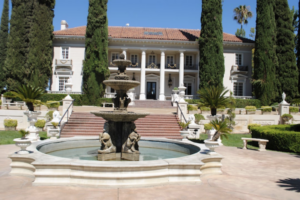
Luminaries like Franklin D. Roosevelt, Greta Garbo and later, Ronald Reagan, have visited the estate. Now it’s available for weddings and special events, with two upstairs floors offering overnight accommodation. There’s even a Mansion yacht available for river cruises.
Further north on the River Road, it’s possible to taste what all those vineyards have been producing at Bogle Vineyards in Clarksburg. Back to the south on the east side of the river you’ll come to Locke, the only town in the U.S. built by and for Chinese immigrants. Founded in 1915, it features preserved wooden buildings, museums, and local eateries, the most famous of which is Al The Wop’s.
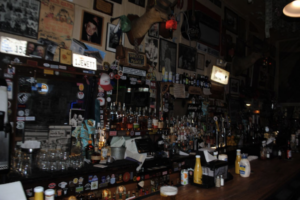
This is a dive bar’s dive bar. Look up “ramshackle” in the dictionary and there’s a picture of Al The Wop’s. The building was constructed in 1915, and a couple decades later a man named Al Adami purchased the building, adding the not-so-quaint Italian reference.
Also known as Al’s Place, it’s possible to get an ice cold beer for $6 as well hamburgers, pasta and any number of specials. Its charm is its age and the feeling one gets from the memorabilia-covered walls. Too many stories originated in places like Al’s, making it worthy of adding your own.
By Ted Johnson, Resident since 1991