
As we travel we are in constant contact with our state’s Spanish heritage. However, there is another foreign influence in our past, often overlooked: Russian traders. More specifically, native Siberians known as the Sakha. Russians brought them to the North Coast where at least 16 Sakha lived at Fort Ross from 1812-1842. Russians depended on them for their excellent hunting, carpenter and even shipbuilding skills.
This element of our complex history can be seen just south of the small coastal town of Gualala. Nestled on the bluffs where the Gualala River runs into the ocean, the Gualala Regional Park has the Sakha shrine.
Getting to Gualala is about a three-hour drive through Marin and Sonoma counties. Depending on the routes, you can pass through some of the state’s most bucolic farm land and open space before getting to the coast in Bodega Bay. En route, you’ll sense small towns like Valley Forge, Jenner and Timber Cove almost screaming at you to check out a coffee shop, grocery store or roadside restaurant.
North of Jenner sits Fort Ross, now a California and National Historical Landmark, which in the early 19th century was the hub of the southernmost Russian settlements. Many Sakha lived here, but it was a hub of ethnic groups that included Native Californians, Native Alaskans, Russians, Finns and Swedes.
The drive on Highway 1 from Bodega Bay into Gualala – on a clear day – can give Big Sur a run for its rank as having the state’s most stunning coastal views. From Bodega to Gualala, however, the White Knuckle time on the steering wheel can get pretty intense.
Deep drop-offs on sheer hillsides are managed on roads that offer very little room for maneuvering. And the scenery almost demands you look. That’s why on a 30-mile stretch from Jenner north most cars average about 30 mph.
What you get upon arrival in Gualala is an old lumber town of about 2,000 with a back-in-time feel. The only sign of a national chain is the Chevron gas station. There are hiking trails, regional parks near and off the ocean, plenty of hotel rooms, and at least two first-rate restaurants – St. Orres to the north and the Sea Ranch Lodge about nine miles south.
A controversial development initiated in the 1960s, the Sea Ranch project led to the creation of the California Coastal Commission. Now it is a 10-mile long community noted for its private roads, homes clad in natural wood set back off the bluffs, winding trails, horse stables and even a landing strip for private planes. The Sea Ranch Lodge ranks as one of the most compelling visual spots in the country for “panoramic views of meadows, cliffs, and the endless Pacific.”
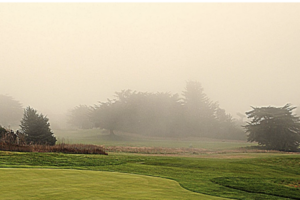
Walking the Coastal Access trails near the Lodge or just about anywhere near Gualala can bring on the feeling of another era. Traversing open spaces with great views and then winding through low-hanging cypress trees, especially in the fog as fogdogs come and go can bring on a feeling of being in a Jane Eyre novel.
There are plenty of cutoffs and roads offering access to the bluffs and the Pacific. On one beach, one woman was picking through the thousands of rocks to find
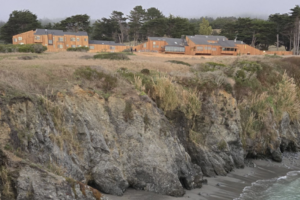
additions for her fish tank. Others scoured the banks for driftwood that could be turned into home decorations.
It is a remote region, but one worth the time and the drive; a place where the congestion and stress of the Bay Area disappears, making it another reason why there’s no place like Northern California.
By Ted Johnson, Resident since 1991