
It’s almost a guaranteed winning bar bet: which American Viticultural Area (AVA) on the West Coast is largest? Naturally, Napa and Sonoma will come up, then Monterey County and Paso Robles, and the Russian River Valley, and the Livermore Valley. All will fall short.
With more than 100,000 acres, the flat, expansive, agriculture-first region known as the Lodi District is California’s largest, and is twice the size of what is produced in both Washington and Oregon combined. The Lodi District lists more than 85 varietals, including its most well- known “old vine zinfandel” that dates to the 1880s. But there are distinct and unique varietals like tannat, which is the national grape of Uruguay, and assyrtiko, a celebrated Greek white wine grape famously from the volcanic island of Santorini.
Paul Marsh, the manager of the Lodi Winegrowers Visitors Center, credits two key characteristics: the sandy soil created by thousands of years the Sacramento River regularly flooding the valley floor; and the “diurnal” effect of the Delta breeze, the strong currents blowing through the Sacramento River Delta that turn 106-degree afternoons into evenings in the 60s.
It takes just over an hour to get from central Danville to the Lodi Visitor Center, a good starting point to assess the day’s plan – full-bodied reds to new “hot” vintages like “GSM” (Grenache, Syrah and Mourvedre blends) to whites and even rosé.
Furthermore, according to Marsh, many wineries have a “no reservations” policy, meaning it’s possible to drop in just about any winery, which is rare in Napa. Also, tastings tend to be not as expensive.
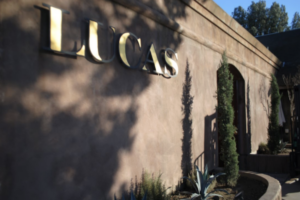
“Everyone wants to help out,” Marsh said, and that friendliness carries over to the vintners. “There’s no real competition, and most are family-owned operations, some dating back seven and eight generations.” And women are prominent, such as winemaker Eliza Hess at Lucas Winery who was driving a forklift when I pulled in. She’s been in California for eight years, she said, but still looks like she just got out of volleyball
practice.
Acquiesce, a white-wine focused operation started 15 years ago by former Chicago resident Sue Tipton, is Lodi through and through. An old barn is the tasting room, which is surrounded by vineyards. Her story begins with a bright white wine that intrigued her. Could she buy a bottle? Nope. It was the last one in the state.
So, with knowing the varietals, Tipton went out and planted Grenache Blanc and Bourboulenc vines, which are among the few white Rhone-style varietals. Blended into her Belle Blanc wine, it has more flavor than most sauvignon blanc or Chablis, and is well-balanced in that the tasting doesn’t overwhelm at any point from sweetness to bitterness.
“She wanted that wine, but she had to go out and grow it herself to have it,” said Shauna Des Voignes, a noted baker who works in the Acquiesce tasting room. With her husband Jake, the Des Voigneses also have their own Heleje wines.
“Many people think of Lodi and high summer heat,” Tipton said, “but it’s very good for white wines, too. And they’re best when paired with food.” To prove that, Acquiesce served Grenache Blanc, Belle Blanc, Grenache Rose and Sparkling Grenache with bites ranging from beets with macadamia nuts to baked Anjou pear.
Most know that grapes from all regions of California can be found in wines state-wide. A bottle only has to have 85 percent of its grapes from a particular AVA to earn a specific designation. And thus many Lodi grapes end up all over the state. “We know, because we see the trucks leave every day,” Tipton said.
Despite what Credence Clearwater Revival sang about 55 years ago, there are plenty of reasons to get stuck in Lodi again.
By Ted Johnson, Resident since 1991